
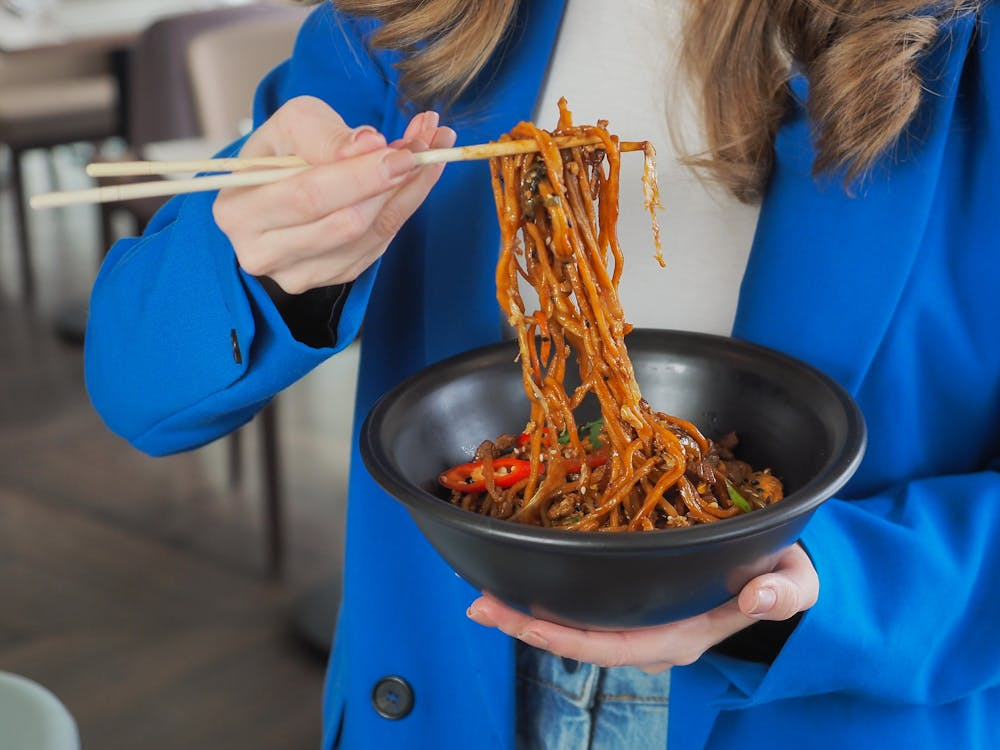
The answer is that spice is not just about pain. It involves biology, culture, personality, learning, and the brain’s reward systems. For many people, the burn becomes part of the pleasure rather than something separate from it.
Some people avoid spicy food completely, while others actively seek out the hottest wings, curries, salsas, or noodles they can find. That difference can seem confusing because spicy food literally causes a pain response. So why would anyone enjoy it? Let’s delve deeper…
Spice Is a Sensation, Not a Taste
Spicy food does not work the same way as sweet, salty, sour, bitter, or umami. The heat from chili peppers comes mainly from a compound called capsaicin.
Capsaicin activates pain and heat receptors in the mouth and body, sending signals similar to those triggered by actual heat. That is why spicy food can make your mouth feel like it is burning even when nothing is physically hot.
Because the experience is sensory and intense, it can feel exciting in a way ordinary flavors do not.
The Brain Can Reward the Burn
When people voluntarily experience controlled stress, such as exercise, scary movies, roller coasters, or spicy food, the brain may release chemicals linked to pleasure and relief.
After the initial burn, some people experience a mild rush, a sense of satisfaction, or a mood lift. The discomfort becomes temporary and manageable, followed by a reward.
This pattern helps explain why people sometimes describe spicy food as addictive. They are often chasing the enjoyable after-effect as much as the heat itself.
Read Why Do We Love True Crime So Much? for another distinct behavior.
Tolerance Changes the Experience
People who eat spicy foods regularly often build tolerance over time. What once felt overwhelming may later feel mild.
As tolerance rises, the person can notice more of the actual flavors behind the heat, such as smokiness, fruitiness, acidity, or depth. Spice becomes one layer of the eating experience rather than the entire experience.
Someone new to spice may feel only pain, while an experienced eater may detect complexity and enjoyment.
See Why Do We Crave Junk Food Late At Night? for another food craving pattern.
Culture and Familiarity Matter
Food preferences are shaped early. In many cultures, spicy dishes are common in family meals and daily cooking.
When people grow up with spice, they often associate it with comfort, celebration, identity, and home. The heat becomes emotionally positive rather than threatening.
By contrast, someone with little exposure may interpret the same sensation as unpleasant or unnecessary.
Personality Plays a Role Too
Some research suggests sensation-seeking personalities may be more drawn to intense experiences, including spicy foods. People who enjoy novelty and stimulation may be more willing to chase stronger flavors.
There is also a challenge element. Some enjoy testing limits, comparing heat levels, or sharing the experience socially with friends.
For others, spice makes food feel less boring and more memorable.
Explore Why Do Some People Thrive Under Pressure? to understand high-intensity preference.
Can You Learn to Like It?
Yes, many people can. Start small and increase gradually. Choose flavorful dishes with moderate heat rather than jumping straight into extreme spice challenges.
Pair spice with foods that balance the burn, such as rice, yogurt, dairy, or rich sauces. This can make the experience more pleasant while your tolerance develops.
Pay attention to flavor, not just intensity. If the only goal is suffering, enjoyment usually disappears quickly.
Check Why Do People Resist Change Even When It’s Good? for insight into adapting slowly.
Loving Spice Is Not Strange
Enjoying spicy food is one example of how both body and experience shape human preferences. What seems painful to one person can feel thrilling, comforting, or delicious to another.
There is no universal right level of heat. Some people are happiest with mild salsa, others with fiery curry, and many somewhere in between.
The love of spicy food is less about enduring pain and more about learning that the burn can come with flavor, reward, and fun.