
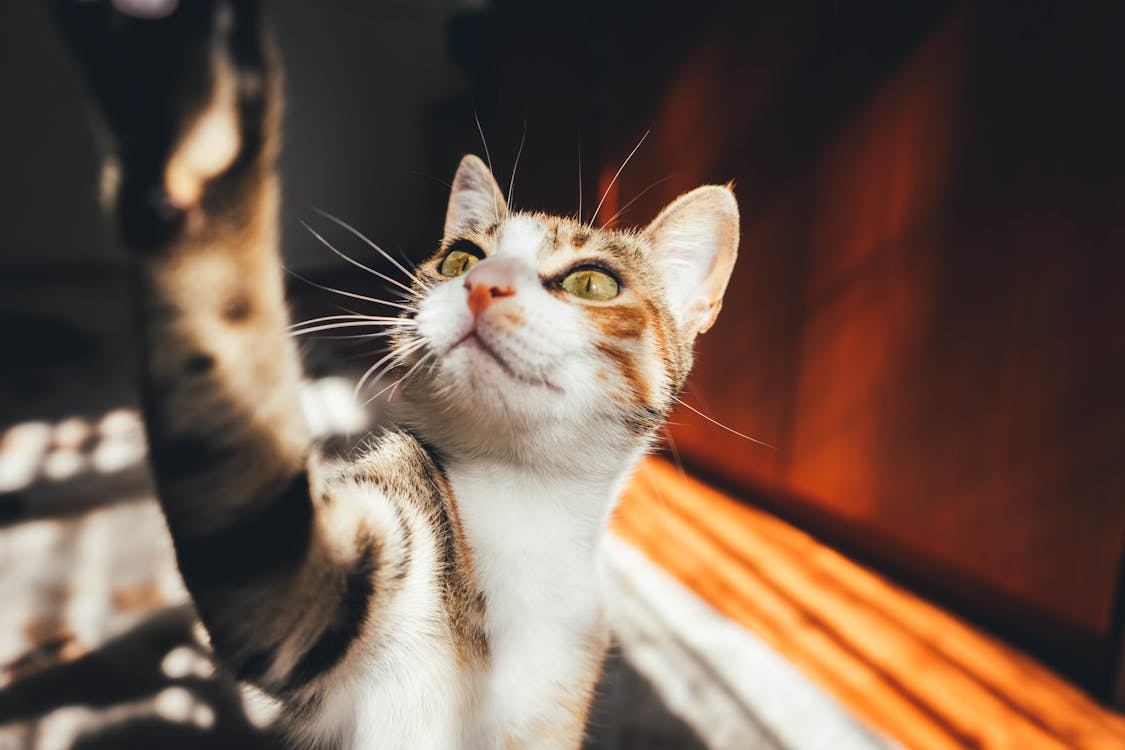
Cats are not usually trying to annoy you for sport. The reason cats knock things off tables is often tied to instinct, curiosity, play, attention, and the environment.
If you live with a cat, you may have seen the scene unfold in slow motion. A paw reaches toward a glass, pen, ornament, or set of keys. Tap. Pause. Another tap. Then the object hits the floor while the cat watches calmly.
It can feel deliberate, mischievous, or oddly personal. But what looks like sabotage is usually normal feline behavior expressed in a human home.
Cats Explore With Their Paws
Humans rely heavily on their hands. Cats use their paws, whiskers, sense of smell, vision, and movement to investigate the world.
A small object on the edge of a table is interesting because it can be touched, moved, and tested. When a cat bats at it, they may simply be learning how it reacts.
Does it slide, wobble, spin, roll, or make noise? For a curious animal, that is both useful information and entertainment.
See Why Do We Get Songs Stuck In Our Heads? for another behavior mystery.
Movement Triggers Hunting Instincts
Cats are natural predators built to notice even the slightest movement. Even household objects can mimic prey when they shift unexpectedly.
A dangling charger cable, a bouncing pen, or a rolling cap can trigger chase-and-pounce instincts. Once the object moves, the cat may become more engaged.
The falling item adds sound and motion, making the game even more rewarding.
Read Why Do Some People Love Spicy Food? for another look at sensory curiosity.
They Learn What Gets a Reaction
Cats are excellent observers of cause and effect. If tapping an object makes you rush across the room, speak loudly, laugh, or engage with them, they may remember that result.
From the cat’s perspective, a quick paw movement successfully changed the environment and captured your attention.
Even negative attention can still be attention. If a cat feels bored or wants interaction, object-batting may become a reliable strategy.
Boredom and Understimulation Matter
Indoor cats need mental and physical stimulation. Without enough play, climbing, exploration, and novelty, they may create their own activities.
A cluttered shelf can become an enrichment zone. Every item offers possibilities for texture, sound, shape, and movement.
Sometimes the behavior is less about the object itself and more about unmet needs for activity and engagement.
Why It Often Happens at the Worst Time
Many cats become active when you are busy, sleeping, working, or focused on something else. That timing is not always malicious.
Cats notice when you are unavailable, and some choose those moments to seek interaction. Others are simply following natural energy bursts, especially in the early morning or evening.
The sound of something hitting the floor is also highly effective at interrupting whatever you were doing.
Explore Why Does Time Feel Faster As You Get Older? for another timing-related curiosity.
How to Reduce the Behavior
Increase interactive play daily. Wand toys, chase games, climbing trees, puzzle feeders, and rotation of toys can reduce boredom-driven mischief.
Give cats legal places to climb and investigate. Window perches, shelves, and cat furniture satisfy curiosity better than crowded countertops.
Manage the environment. Move fragile items, secure valuables, and keep tempting objects away from edges.
Reward calm behavior and appropriate play. If possible, avoid dramatic reactions when harmless objects are knocked down, as overly dramatic responses can reinforce the game.
Learn Why Do People Rewatch The Same Shows? for another familiar behavior pattern.
Your Cat Is Being a Cat
Knocking things off tables often makes perfect sense from a cat’s point of view. They are exploring, hunting, experimenting, or trying to connect with you.
That does not make broken mugs less frustrating, but it can change how you respond.
Instead of asking why your cat is plotting against you, the better question may be whether your home is giving that clever little predator enough safe ways to use its instincts.